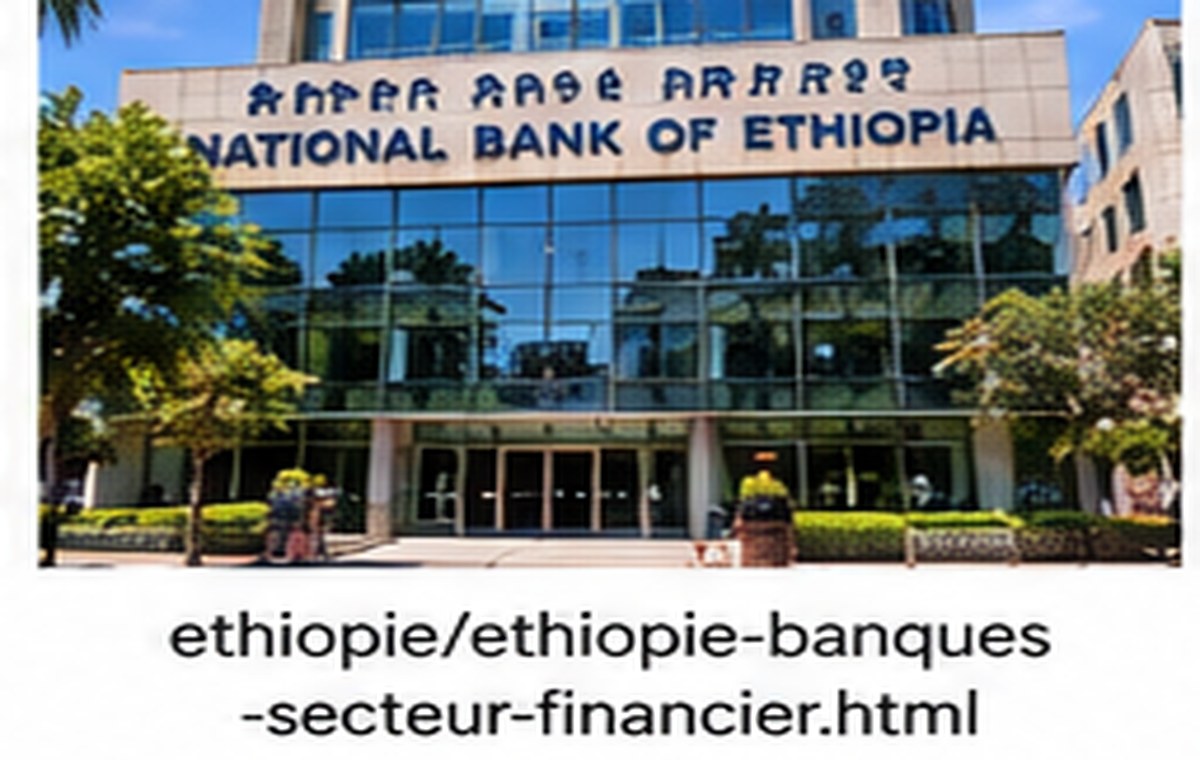
Ethiopia banks and financial sector overview cover 32 banks at the end of June 2025, 31 commercial and one development bank, according to the National Bank of Ethiopia's March 2026 financial stability report. The commercial banks break down into one large, five medium-sized and twenty-five small institutions, with 13,120 branches and 4,737 billion birr in assets. State-owned Commercial Bank of Ethiopia held 49.1% of banking assets. Banking Business Proclamation no. 1360/2025, enacted on 12 March 2025, opens the sector to foreign investors, and a licensing directive sets conditions for subsidiaries and representative offices.
How many banks does Ethiopia have?
The NBE's March 2026 financial stability report counts 32 banks at the end of June 2025: 31 commercial banks and one development bank. The commercial banks break down into one large, five medium-sized and twenty-five small institutions.
Commercial Bank of Ethiopia, nearly half the market
The state-owned Commercial Bank of Ethiopia held 49.1% of banking assets at the end of June 2025. The IMF notes that it was recapitalised in July 2024 through government bonds, when the birr moved to a floating exchange rate.
Proclamation no. 1360/2025: foreign banks admitted
Enacted on 12 March 2025, Banking Business Proclamation no. 1360/2025 opens Ethiopia's banking sector to foreign investors. A licensing directive issued the same year sets out the conditions for establishing subsidiaries and representative offices.
The NBE, regulator under Proclamation no. 1359/2025
The National Bank of Ethiopia licenses and supervises banks, insurers and microfinance institutions under Proclamation no. 1359/2025. Its monetary choices are set out in the overview of Ethiopia's economy and finance.
Assets up 44.5% in a year
Commercial bank assets reached 4,737 billion birr at the end of June 2025, up 44.5% year on year. This expansion coincides with the first year of the floating exchange rate and the IMF Extended Credit Facility programme.
Capital adequacy and bad loans in June 2025
The system's capital adequacy ratio stood at 19.1% against a regulatory minimum of 8%, and non-performing loans at 3.1% against a 5% ceiling, according to the financial stability report published by the NBE.
Reserve requirements at 10% and deposits freed
In December 2025, the NBE raised reserve requirements to 10%, on a monthly average basis, and scrapped the minimum interest rate on deposits. Banks freely set what they pay savers, under a 24% cap on credit growth.
Interest-free finance: 4 banks and 19 windows
In June 2025, 23 commercial banks offered interest-free finance: four fully Islamic banks and nineteen windows. Djibouti opted for a dedicated law, no. 116/AN, described on the banks in Djibouti page.
Dashen, Awash and Wegagen, private banks
Dashen Bank and Awash Bank are among Ethiopia's private commercial banks. Wegagen Bank published a prospectus in 2025 for registering its shares with the Ethiopian Securities Exchange, a sign of the emerging link between banking and the stock market.
Amhara, Gadaa, Omo, Sidama: the 2022 wave
The NBE list attaches the year 2022 to several banks, including Amhara Bank, Gadaa Bank, Omo Bank, Sidama Bank and Rammis Bank, an Islamic institution. Siket Bank carries the date 2023. Their addresses appear on the official page.
Branches, ATMs and mobile banking
Besides 13,120 branches, the sector relied in June 2025 on 13,313 ATMs, 19,638 payment terminals and 54.0 million mobile banking accounts. Household access is detailed on the microfinance and inclusive finance in Ethiopia page.
Placing Ethiopia in the region
Until Proclamation no. 1360/2025, ownership of Ethiopian banks was reserved for nationals. To compare with groups present in neighbouring countries, see banks in Kenya and the list of African banks.
Ethiopian banks cited by the NBE
- Commercial Bank of Ethiopia: State-owned bank with 49.1% of banking assets at end-June 2025, recapitalised through government bonds in July 2024.
- Dashen Bank: Ethiopian private commercial bank, one of the market's private institutions licensed by the NBE.
- Awash Bank: Ethiopian private commercial bank, licensed and supervised by the National Bank of Ethiopia.
- Wegagen Bank: Bank that published a prospectus in 2025 for registering its shares with the ESX.
- Amhara Bank S.C.: Recent private bank, dated 2 February 2022 on the NBE's banks page.
- Gadaa Bank S.C.: Commercial bank dated 2022 on the National Bank of Ethiopia's official list.
- Omo Bank S.C.: Commercial bank among the institutions dated 2022 by the NBE.
- Sidama Bank S.C.: Recent commercial bank on the NBE list with the date 2022.
- Rammis Bank S.C.: Islamic bank dated 2022 on the NBE's official banks page.
- Siket Bank S.C.: Commercial bank dated 2023 on the National Bank of Ethiopia's list.
Lenders in this country
- Commercial Bank of Ethiopia: Ethiopia's largest commercial bank, offering a range of loan products and overdraft facilities to individuals and businesses.
- ZamZam Bank: Ethiopia's first full-fledged interest-free bank, providing Shariah-compliant banking services from its main branch in Addis Ababa and beyond.
- Commercial Bank of Ethiopia: Ethiopia's largest bank offering digital loans to individuals, mortgage loans including for Ethiopians living abroad, and a broad range of business financing.
Opening an account at an Ethiopian bank
- Select a bank licensed on the NBE list, comparing branch network, mobile banking and interest-free products.
- Present an Ethiopian ID or passport and, for a foreigner, the residence or work permit requested by the bank.
- State the desired currency and ask the bank about rules for foreign currency accounts since the July 2024 liberalisation.
- Compare the interest offered on savings, now freely set since the minimum deposit rate was scrapped in December 2025.
- Activate mobile banking and check transaction limits as well as transfer fees in birr.
- For a loan, prepare a solid file, as Ethiopian banks remain subject to the 24% cap on credit growth.
Ethiopian bank indicators
| Banking indicator | Value and date | Source / note |
|---|---|---|
| Commercial bank assets | ETB 4,737 bn (June 2025) | NBE, +44.5% year on year |
| Commercial Bank of Ethiopia share | 49.1% of assets (June 2025) | IMF |
| Capital adequacy ratio | 19.1% (June 2025) | regulatory minimum of 8% |
| Non-performing loans | 3.1% (June 2025) | 5% ceiling |
| Reserve requirements | 10% (December 2025) | NBE, monthly average |
| Account and transfer fees | variable | per the bank's fee schedule |
Documents requested by Ethiopian banks
- Valid Ethiopian ID card or passport
- Passport photo and phone number to activate mobile banking
- Proof of address in Addis Ababa or the region of residence
- Work or residence permit for a foreign national
- For a company: Ethiopian business licence and articles of association
- Proof of income for any loan application in birr
Mistakes to avoid with a bank in Ethiopia
- Exchanging dollars on the parallel market for a better rate, when the premium had shrunk to about 13% and the deal falls outside authorised channels.
- Believing a foreign bank can already open branches without a licence, when the 2025 directive governs subsidiaries and representative offices.
- Choosing an Ethiopian bank solely on its size without checking its licence and the ratios published by the NBE.
- Accepting a loan offered by a non-bank intermediary demanding upfront fees in the name of a well-known Addis Ababa bank.
- Assuming interest-free finance is available everywhere, when only 23 commercial banks offered it in June 2025.
Banks in Ethiopia: common questions
What is the largest bank in Ethiopia?
Commercial Bank of Ethiopia, a state-owned lender, accounted for 49.1% of banking assets at end-June 2025. It was recapitalised in July 2024 through government bonds and also has a licensed operation in Djibouti.
Can foreign banks set up in Ethiopia?
Yes, since Banking Business Proclamation no. 1360/2025, enacted on 12 March 2025. An NBE licensing directive sets the requirements for subsidiaries and representative offices, to be consulted before any establishment project.
How many Islamic banks are there in Ethiopia?
Four fully Islamic banks operated in June 2025, alongside nineteen commercial banks with an interest-free window, making 23 institutions offering this type of finance according to the NBE's financial stability report.
Are Ethiopian banks listed on the stock exchange?
The Ethiopian Securities Exchange started trading in January 2025 with two listed financial institutions. Wegagen Bank published a prospectus for registering its existing shares, illustrating the growing ties between banks and the Ethiopian stock market.
Official sources
NBE – Banques agrééesnbe.gov.et
NBE – Rapport de stabilité financièrenbe.gov.et
NBE – Directive licences bancaires 2025nbe.gov.et
NBE – Comité de politique monétaire n°5nbe.gov.et