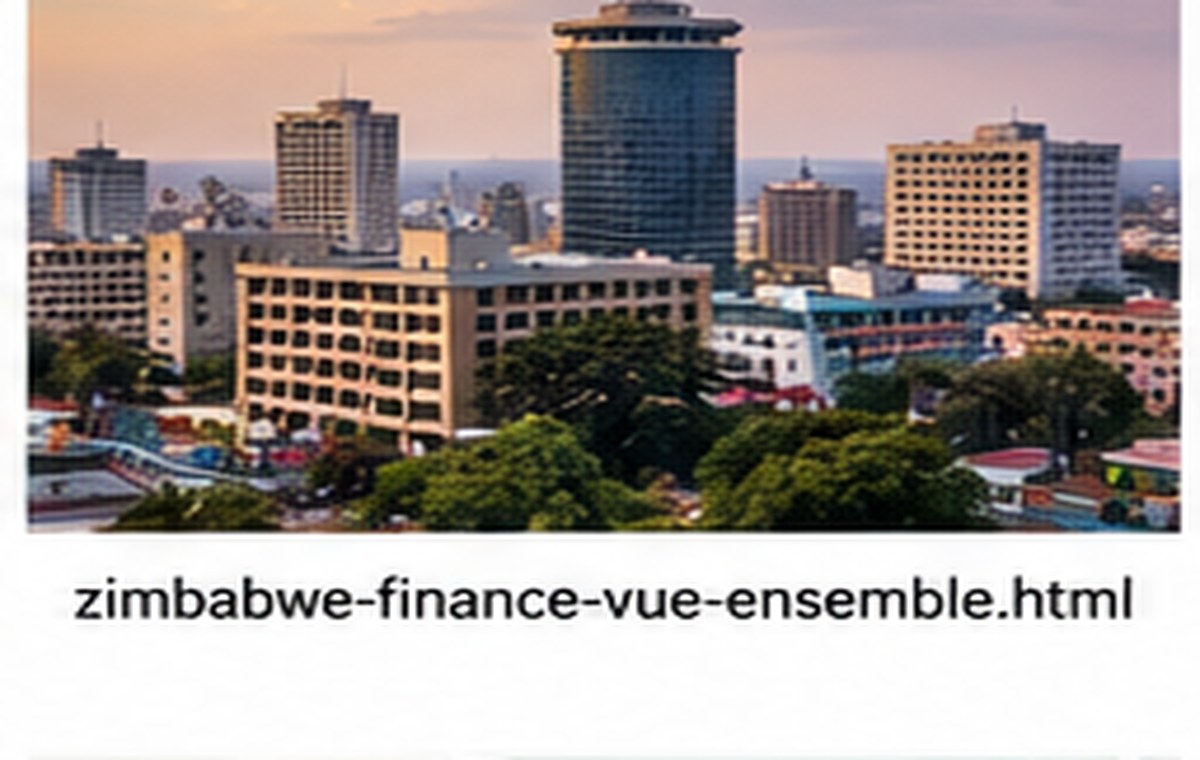
Zimbabwe: financial sector and economic overview is anchored by the ZiG, short for Zimbabwe Gold, issued by the Reserve Bank of Zimbabwe (RBZ), which moved within 25 to 27 ZiG to the US dollar in 2026. The RBZ monetary policy committee cut its policy rate from 30% to 27.5% at the end of September 2026, and lowered the Targeted Finance Facility rate from 15% to 12.5%. Loans to productive sectors remain capped at 22.5%. Inflation fell to 4.4% in March 2026, and an IMF staff-monitored programme accompanies the liberalisation of the foreign exchange market.
The ZiG, a national currency under watch
The ZiG, short for Zimbabwe Gold, is the currency issued by the Reserve Bank of Zimbabwe (RBZ). In 2026, it moved within a range of 25 to 27 ZiG to the US dollar, according to figures published at the September monetary policy committee meeting.
From 35% to 27.5%: the RBZ's easing cycle
The RBZ monetary policy committee cut its policy rate from 30% to 27.5% at the end of September 2026. Cumulative cuts have reached 7.5 points since June 2026, after a long period of high rates intended to protect the ZiG.
Targeted Finance Facility lowered to 12.5%
At the same meeting, the RBZ reduced the rate on its Targeted Finance Facility from 15% to 12.5%. Banks remain subject to a 22.5% cap on the all-in rate of their loans to productive sectors.
More than 2 billion dollars in reserves
Foreign exchange reserves backing the ZiG exceeded USD 2 billion in September 2026, or about two months of imports. Building them up is one of the criteria monitored by the IMF, whose end-March net reserves target was met.
Inflation finally in single digits
The IMF reports inflation of 4.4% in March 2026, after a steep decline. The Equity Axis website sees it as the first lasting single-digit inflation in ZiG for three decades, a break for a country long marked by monetary instability.
What does the IMF's ten-month programme provide?
On 16 April 2026, IMF management approved a ten-month staff-monitored programme (SMP), with no financing. It supports a roadmap for clearing arrears and re-engaging with Zimbabwe's external creditors.
Growth of 8.3% in 2025
Following the first SMP review, completed on 27 July 2026, the IMF estimated Zimbabwe's growth at 8.3% in 2025. It projects 5% in 2026, then around 4.2% over the medium term, provided reforms continue.
September 2026: agreement on the second review
On 17 September 2026, the IMF announced a staff-level agreement on the second SMP review, press release PR 26/293. This step, which releases no funds, underpins the credibility of the arrears clearance process.
Liberalising the foreign exchange market
The IMF recommends that Harare maintain a tight monetary policy and liberalise the foreign exchange market. Both conditions aim to consolidate confidence in the ZiG, while insurance remains largely dollarised according to IPEC.
Thirteen banks and seven microbanks
As at 30 June 2024, the RBZ recorded 13 commercial banks, 3 building societies, POSB and 7 deposit-taking microbanks. CBZ, Stanbic, FBC and the 2026 prudential rules are detailed in banks in Zimbabwe.
IPEC and a dollarised insurance sector
The Insurance and Pensions Commission (IPEC) supervises a largely dollarised sector, which had 19 non-life insurers at the end of September 2024. The licence clean-up and market concentration are explained in insurance in Zimbabwe.
Comparing Harare and Lusaka
Zimbabwe shares the Zambezi and a commodity-driven economy with neighbouring Zambia. The overview of finance in Zambia sets its monetary choices against Harare's, while the list of African banks places Zimbabwean institutions in context.
Key financial institutions in Zimbabwe
- Reserve Bank of Zimbabwe (RBZ): Central bank issuing the ZiG, which sets the policy rate and supervises banks and microbanks.
- Insurance and Pensions Commission (IPEC): Regulator of insurance companies, intermediaries and pension funds in Zimbabwe.
- Infrastructure Development Bank of Zimbabwe (IDBZ): Development finance institution recorded by the RBZ alongside AFC Land & Development Bank and SMEDCO.
Lenders in this country
- NMB Bank Zimbabwe: Zimbabwean commercial bank providing personal banking services, including personal loans described in its online customer support centre.
- FBC Building Society: Building society within Zimbabwe's FBC group, specialising in mortgage loans for acquiring and building residential homes.
Following the Zimbabwean economy step by step
- Read the RBZ monetary policy committee statement to find the policy rate and reserve ratios.
- Track the ZiG against the dollar, which ranged between 25 and 27 ZiG to USD 1 in 2026.
- Consult IMF press releases on the SMP: approval in April, first review in July, second review in September 2026.
- Check banking institutions in the RBZ consolidated report as at 30 June 2024.
- Ask IPEC about an insurer or agent before taking out a policy.
- Supplement with The Herald, NewsDay or the Financial Gazette for market news.
Zimbabwe's macroeconomic dashboard
| Indicator | Value | Source and date |
|---|---|---|
| Policy rate | 27.5% (previously 30%) | RBZ, end of September 2026 |
| Targeted Finance Facility | 12.5% (previously 15%) | RBZ, September 2026 |
| Inflation | 4.4% | IMF, March 2026 |
| GDP growth | 8.3% in 2025, 5% projected for 2026 | IMF, July 2026 |
| Reserves backing the ZiG | over USD 2bn, about 2 months of imports | RBZ via The Herald, September 2026 |
| ZiG exchange rate | 25 to 27 ZiG per USD 1 | Range observed in 2026 |
RBZ and IMF texts to read
- RBZ monetary policy committee statements
- IMF press release PR 26/122 on approval of the SMP
- IMF press release on the first review of 27 July 2026
- Press release PR 26/293 on the agreement on the second review
- RBZ consolidated report on banking institutions as at 30 June 2024
- IPEC report on the first nine months of 2024
Misconceptions about the Zimbabwean economy
- Believing the SMP brings funds to Zimbabwe: this ten-month programme is monitoring by IMF staff, with no financing.
- Directly comparing the 27.5% policy rate with the cost of productive loans, capped at 22.5% all-in for banks.
- Relying on an old RBZ page still citing Barclays instead of the consolidated report of June 2024.
- Changing dollars with unauthorised intermediaries, at the risk of fraud, when the IMF is precisely recommending liberalisation of the official market.
What people look up on Zimbabwean finance
What is Zimbabwe's currency in 2026?
The national currency is the ZiG (Zimbabwe Gold), issued by the Reserve Bank of Zimbabwe. It moved between 25 and 27 ZiG to the dollar in 2026, and the reserves backing it exceeded USD 2 billion in September.
What is the Reserve Bank of Zimbabwe's policy rate?
It was cut from 30% to 27.5% at the end of September 2026. Cumulative cuts since June 2026 reach 7.5 points, and the Targeted Finance Facility rate fell from 15% to 12.5%.
Does Zimbabwe have an IMF programme?
Yes, a ten-month staff-monitored programme (SMP), approved on 16 April 2026, with no financing. The first review was completed on 27 July and an agreement on the second review was announced on 17 September 2026.
What is inflation in Zimbabwe?
According to the IMF, inflation stood at 4.4% in March 2026 following a sharp fall. The RBZ then began monetary easing from June 2026, with 7.5 points of cumulative cuts.
Official sources
FMI : approbation du SMPimf.org
FMI : première revue du SMPimf.org
FMI : accord sur la deuxième revueimf.org
The Herald : taux directeur à 27,5 %heraldonline.co.zw